David Durbin

The Healthcare Labor Market Is Sending Signals. Are You Listening?
For the last several years, it wasn’t hard to tell when the healthcare labor market was changing. Demand surged. Rates followed. Talent tightened. Healthcare organizations reacted.
Today, the signals aren’t nearly as obvious.
Overall demand has become more stable. Bill rates are moving within a much narrower range. But look a little closer and the market starts telling a different story.
Nursing and allied health aren’t necessarily moving together. Demand and bill rates aren’t always following the same path. And what’s happening nationally may look very different from what healthcare organizations are experiencing locally.
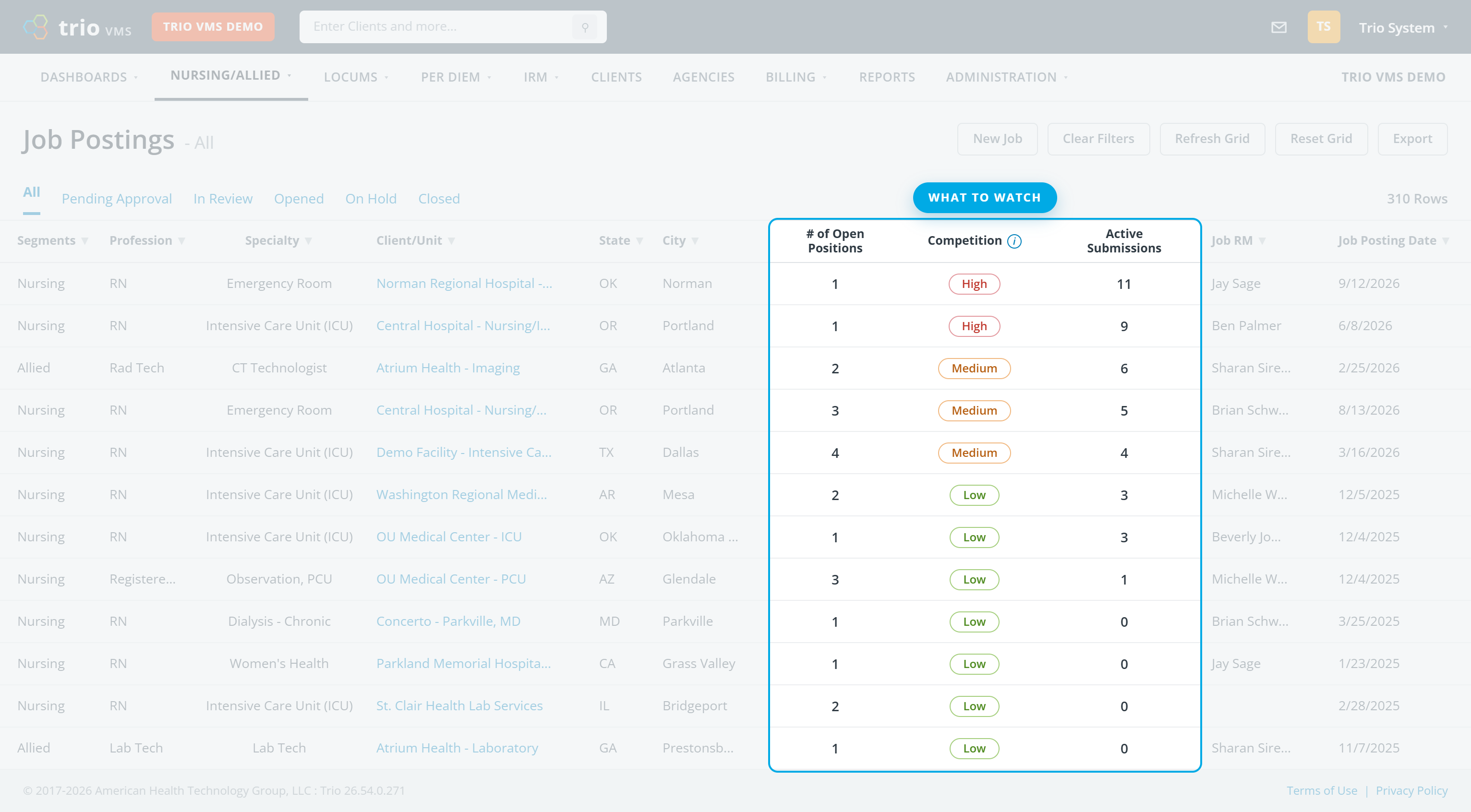
That makes knowing which signals to watch — and what they mean — more important than ever.
Trio’s August 2026 Industry Demand Report looks at the latest healthcare workforce data to help make sense of those signals and what they could mean heading into fall.
Fill out the form to get the report sent to your email inbox.
Stability Can Hide a Lot
At the national level, July looked relatively uneventful. Overall healthcare workforce demand moved just 0.5%.
Look beneath that number, though, and there was considerably more movement.
Nursing demand increased 7.4% from June, while allied health demand declined 9.6%. At the same time, average bill rates remained remarkably steady, with Nursing averaging $84.54 and Allied $84.34.
That creates an important question for healthcare workforce leaders:
If demand is moving but rates aren’t moving with it, what should you be preparing for next?
There isn’t one answer. And that may be the most important takeaway.
Your Market May Be Telling a Different Story
National averages provide useful context, but they can’t tell you what is happening in every labor market.
The August data continues to show meaningful differences in both demand and bill rates across the country. Some high-demand markets are also among the most expensive. Others are supporting significant demand at rates well below the national average.
That can change the conversation around sourcing, rates, coverage, and where healthcare organizations may need greater flexibility.
Before assuming a difficult-to-fill role requires a higher rate, for example, it helps to understand whether the pressure is national, regional, specialty-specific, or unique to your organization.
Market context doesn’t make that decision for you. It helps you make it with more information.
Nursing and Allied Are Sending Different Signals
The same principle applies across workforce categories.
Nursing demand moved higher in July while Allied softened. Early August activity gives us another set of signals to watch as we head toward fall.
Does Nursing continue to build? Does Allied demand remain softer? Does stronger demand eventually put more pressure on bill rates?
One month of data can’t answer those questions. Looking at the latest movement alongside one-year and four-year trends gives us a much better place to start.
What Should Healthcare Leaders Watch Next?
A steadier healthcare labor market doesn’t mean the market is easier or that there isn't risk. It means the important changes may be harder to see in the headline numbers.
The questions are becoming more specific:
-
Where is demand actually increasing?
-
Which specialties are creating the most pressure?
-
Are bill rates responding?
-
How different is your local market from the national picture?
-
And what are the early signals telling you about what could happen next?
Those are the questions behind Trio’s August Industry Demand Report.
Go Beyond the National Average
The August 2026 Industry Demand Report includes:
-
The latest Nursing and Allied demand and bill-rate trends
-
One-year and four-year market views
-
Nursing and Allied analysis
-
Geographic demand and bill-rate intelligence
-
Early market signals to watch heading into fall
-
Perspectives from Trio workforce leaders
-
Five workforce signals healthcare leaders should be watching next
The healthcare labor market is sending signals. The opportunity is understanding what they could mean before making your next workforce decision.
Complete the form to get the August 2026 Industry Demand Report sent to your email inbox, with complete data, geographic analysis, and workforce insights.