Why Healthcare Workforce Strategy Is Now Built on VMS and AI
.png)
This blog is based off an article that first appeared in The Future of Work Exchange.
Healthcare workforce leaders are confronting a reality that is no longer theoretical: labor strategy has become inseparable from technology strategy. The systems used to manage staffing are now shaping how organizations respond to volatility, control costs, and sustain care delivery in an environment defined by chronic shortages and increasing complexity.
That shift was a central theme in a recent Future of Work Exchange (FOWX) podcast hosted by Ardent Partners, featuring Kelly Rakowski, CEO of Trio Workforce Solutions. The conversation explored how the extended workforce is reshaping healthcare, why vendor management systems (VMS) are evolving beyond transactional tools, and how artificial intelligence is accelerating a new model for workforce management.
The takeaway for healthcare executives is clear: VMS and AI are no longer supporting players, both are becoming foundational to workforce strategy itself.
From Workforce Infrastructure to Strategic Capability
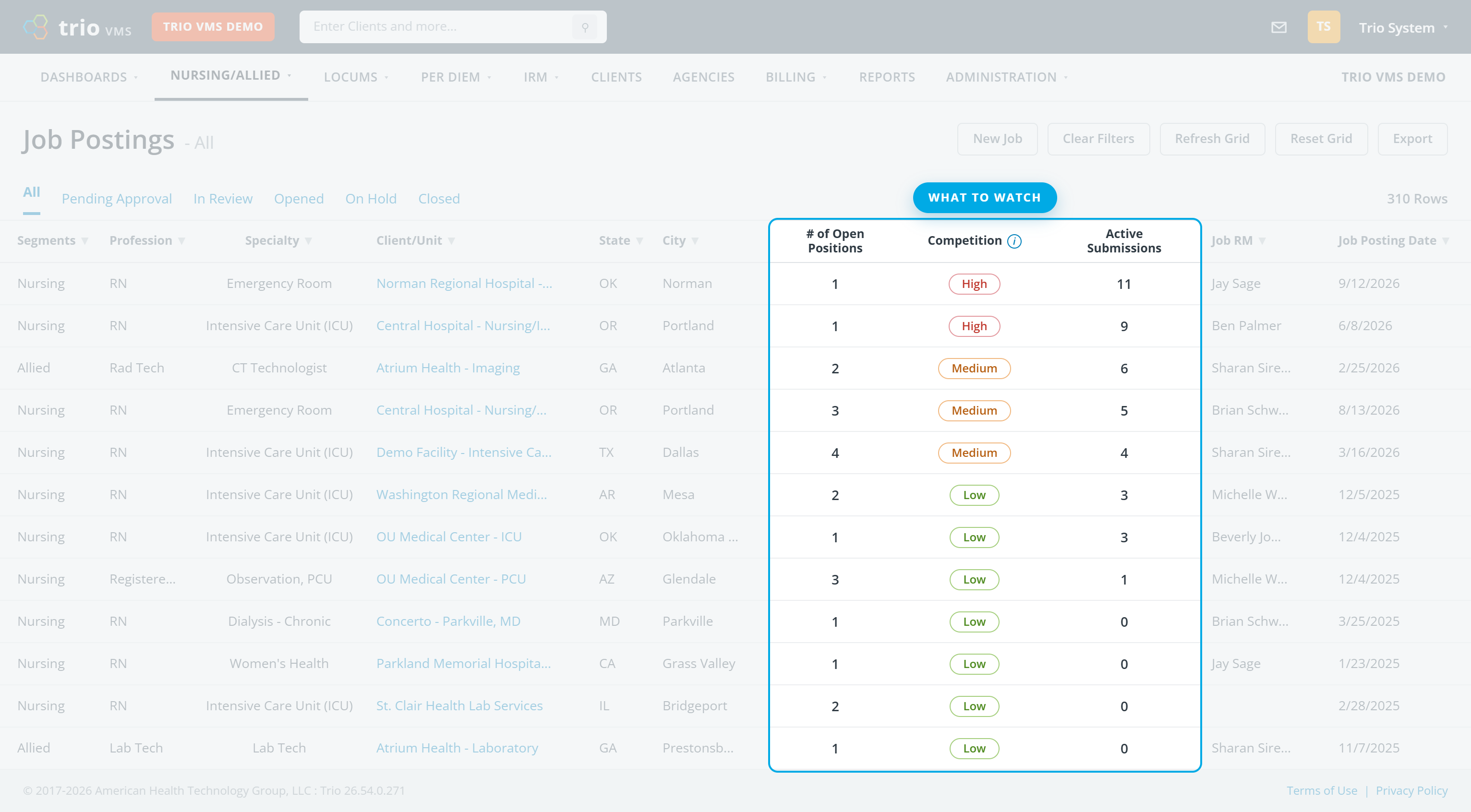
Historically, workforce technology in healthcare served a narrow purpose. VMS platforms were implemented to manage contingent labor logistics: posting jobs, tracking submissions, processing credentials, and reconciling time and invoices. These capabilities were necessary but operated largely in isolation from broader workforce planning and clinical operations.
That approach is no longer sufficient.
Healthcare organizations now rely on a far more diverse mix of labor models, including internal float pools, internal agencies, per diem clinicians, travelers, locum tenens providers, and emerging flexible staffing models. At the same time, leaders are under pressure to reduce premium labor spend, maintain quality standards, and respond quickly to patient demand fluctuations.
Managing this environment requires more than operational efficiency. It requires visibility, coordination, and foresight; all capabilities that modern VMS platforms are increasingly designed to deliver.
The VMS as a Workforce Command Center
One of the most significant shifts highlighted in the Ardent Partners discussion is how healthcare organizations are redefining the VMS role. Rather than treating it as a standalone system for contingent labor, many are positioning it as a centralized hub for workforce orchestration.
When integrated with HR systems, scheduling platforms, payroll, and financial tools, the VMS becomes a real-time source of truth across workforce modalities. Leaders gain the ability to see supply and demand holistically, understand cost implications, and make informed deployment decisions before staffing challenges escalate into operational crises.
In this model, the VMS supports proactive workforce management, helping organizations anticipate needs, optimize internal resources, and reduce reliance on reactive, high-cost labor solutions.
How AI Is Accelerating Workforce Decisions
Artificial intelligence is rapidly expanding what workforce platforms can do. In healthcare, its impact is most evident where scale, speed, and accuracy matter most.
AI-enabled candidate evaluation allows organizations to assess clinician qualifications, experience, licensure, and job requirements more quickly and consistently than manual processes alone. The result is faster hiring decisions and stronger alignment between clinicians and clinical environments.
AI is also addressing long-standing administrative burdens. Time and pay validation, often a manual, error-prone process, can now be automated to improve accuracy and reduce managerial workload. Similarly, AI-driven contract interpretation is helping organizations navigate the complexity of physician and locum tenens agreements with greater confidence and financial control.
These applications do not replace the human element. Instead, they allow workforce teams to focus on higher-value decisions while technology handles repetitive, high-volume tasks.
Technology With a Human Center
A critical point emphasized throughout the FOWX conversation is balance. Healthcare staffing is inherently human. Trust, communication, clinical judgment, and cultural fit cannot be reduced to data points alone.
Trio views AI as an enabler, not a substitute, for experienced workforce leadership. The most effective strategies combine advanced technology with human insight, ensuring that automation supports, rather than undermines, the relationships and judgment that quality care depends on.
What This Means for Healthcare Leaders
As workforce models continue to evolve, healthcare organizations will need systems that are flexible, intelligent, and deeply integrated into clinical and operational decision-making. VMS technology and AI are becoming essential tools for navigating labor shortages, financial pressures, and shifting care delivery models.
For executives, the implication is straightforward: workforce management can no longer be treated as a back-office function. It is a strategic discipline that demands the same level of investment, integration, and executive attention as other core enterprise systems.
As Ardent Partners’ analysis makes clear, the future of healthcare workforce management will be shaped by platforms that connect data, technology, and people into a cohesive strategy. Trio believes that alignment is foundational to building a workforce that is resilient, sustainable, and prepared for what comes next.